
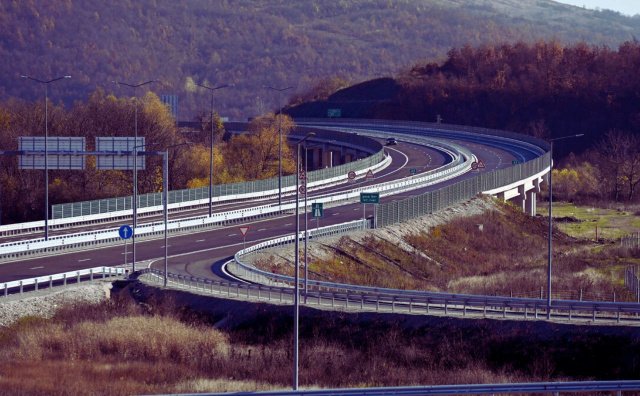
The Bulgarian government has taken a decisive step toward completing the long-delayed Hemus Highway, issuing construction permits for approximately 36 kilometers of the route. The move clears the path for major construction activities to begin in 2026, according to documents published in the State Gazette.
The permits were signed by outgoing Regional Development Minister Ivan Ivanov on December 23, 2025, and officially promulgated on January 6, 2026. They cover sections 4 and 5 of the highway, passing through the municipalities of Pleven, Lovech, Letnitsa, Suhindol, and Pavlikeni in northern Bulgaria.

Hemus Highway is a flagship infrastructure project designed to connect Sofia with Varna, significantly reducing travel times and easing chronic congestion along the Sofia–Varna road. Despite being planned decades ago, progress has been slow due to funding gaps, administrative hurdles, and legal disputes.
Section 4 of the highway stretches between Pleven and Letnitsa, covering roughly 28.2 kilometers. It is divided into two subsections, each at a different stage of development, reflecting the uneven pace that has long characterized the project.
Subsection 4.1 runs for about 13 kilometers, from the end of the Pleven road junction to the start of the Drenov junction. It received its construction permit shortly before Christmas, completing both design and land expropriation procedures.
According to project documentation, construction on this segment is expected to progress steadily once work begins, with completion projected around 2028. Authorities say the resolved administrative status will help avoid delays that have plagued earlier phases.
Subsection 4.2 extends for approximately 14 kilometers, linking the Drenov junction to Letnitsa. This part received its permit earlier, in February 2025, and construction is already at an advanced stage.
Officials estimate that Subsection 4.2 could be completed by the end of 2026, making it one of the first newly permitted stretches to open to traffic. Its completion is expected to provide immediate relief to drivers in the region.
Section 5, also known as Lot 5, connects Letnitsa with Pavlikeni over a distance of 23.2 kilometers. Construction permits for this section have now been granted, with land expropriation and preparatory works already finalized.
Importantly, the permits include provisions for early implementation. This allows construction activities to begin even if appeals against the permits are still under review, a mechanism intended to prevent further delays.
The government says the early start is crucial for reducing risks to drivers currently relying on the heavily congested Sofia–Varna road. Until the highway is fully completed, traffic accidents and bottlenecks remain a persistent concern.
While major construction is expected to begin in 2026, officials caution that exact start dates will depend on final preparatory steps and the availability of financing. Budget allocations and potential European funding will play a key role in determining the pace of work.
Progress has also been recorded on other sections of the Hemus Highway. In October 2025, a 10-kilometer stretch between the Boaza and Dermantsi interchanges was opened to traffic, marking a rare but symbolic milestone.
Construction continues on the next two segments, totaling 36.28 kilometers, which connect Dermantsi to the Pleven–Lovech junction. Work toward Pleven is nearing completion, with only final asphalt layers, road markings, and signage remaining.
However, progress remains slower on the central section between Lukovit, Ugarchin, and Kalenik, spanning 19.1 kilometers. Authorities attribute the delays to complex terrain, technical challenges, and earlier contractual issues.
The Ministry of Regional Development and Public Works maintains that, despite setbacks, the full Hemus Highway remains on track for completion by 2030. Once finished, it is expected to transform transport links across northern Bulgaria.
The planned investment for the remaining 36 kilometers is estimated at around 1.1 billion leva, or roughly €560 million. For many in the region, the newly issued permits offer renewed hope that one of Bulgaria’s most ambitious infrastructure projects may finally be nearing the finish line.