
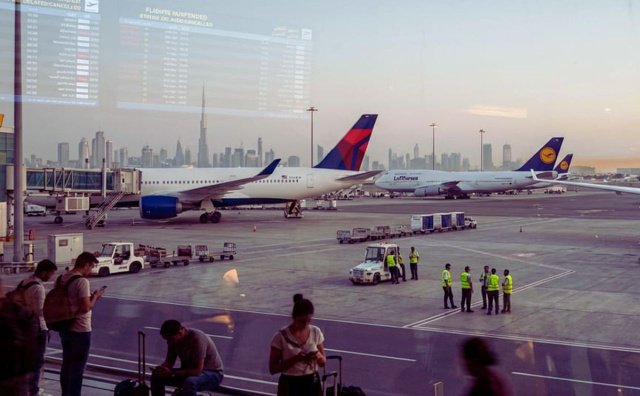
Roughly 1,000 Bulgarian tourists are stranded across the Persian Gulf region after major airlines abruptly canceled flights amid escalating security tensions in the Middle East. Another 100 citizens remain stuck in Jordan, leaving families anxious as authorities work to organize their safe return home.

The disruptions follow cancellations by low-cost carriers including Wizz Air, Flydubai and Ryanair, which suspended operations to several regional destinations after airspace closures and safety concerns intensified earlier this week.
According to figures provided to Bulgarian Telegraph Agency by the Future for Tourism Association, most of the affected travelers had been visiting Gulf countries on organized tours or using regional hubs for connecting long-haul flights.
Passengers whose departures were canceled have been accommodated in hotels at the airlines’ expense. Tour operators say travelers are receiving assistance with food, transport and information updates, and that the situation on the ground remains calm despite uncertainty about when flights will resume.
Tourism representatives are now compiling detailed lists of Bulgarians currently in the region and forwarding the data to the Ministry of Tourism of Bulgaria. Coordination is also underway with the Ministry of Foreign Affairs of Bulgaria to determine evacuation or repatriation options.
Svetlana Vatashka of the association said the caretaker government is expected to organize special measures to bring nationals home. She noted that many travelers are concentrated around Dubai International Airport, one of the world’s busiest transit hubs, complicating logistics as connecting routes remain suspended.
Carriers such as Qatar Airways normally operate extensive networks from the region to destinations including the Maldives and Southeast Asia. With flights halted or rerouted, thousands of transit passengers have found themselves temporarily stranded.
Caretaker Foreign Minister Nadezhda Neynski said approximately 11,400 Bulgarian citizens, alongside hundreds of tourists, are currently located across the broader Middle East. Authorities, she added, are in constant communication with embassies, allied governments and diplomatic missions to ensure updated information on their whereabouts.
Evacuation procedures had already been reviewed before hostilities intensified, she said, allowing officials to act quickly. “We have detailed knowledge of where our citizens are and are prepared to respond depending on security developments,” she noted in remarks to reporters.
The aviation disruption stems from a sharp regional escalation involving Israel, the United States and Iran. Several governments ordered temporary airspace closures after missile and drone exchanges heightened risks to civilian aircraft.
Airspace has reportedly been fully shut over Qatar, Iraq, Kuwait and Bahrain, while Syria and the United Arab Emirates introduced partial restrictions.
U.S. President Donald Trump confirmed coordinated American and Israeli strikes on Iranian targets. Tehran subsequently launched retaliatory missile attacks, including threats near the United States Fifth Fleet headquarters, deepening concerns over regional stability.
For Bulgarian travelers, the geopolitical clash has translated into long waits, uncertain timetables and hurried contingency plans. Tour operators say some families have exhausted their original budgets and rely on airline support while awaiting confirmation of new departures.
Industry groups have urged Sofia to consider chartered rescue flights or coordinated transfers through safer European hubs if commercial routes remain limited. Similar measures were used during previous crises to return citizens from conflict zones.
Despite the uncertainty, officials emphasize that communication lines remain open and no injuries involving Bulgarian tourists have been reported. For now, stranded passengers can only monitor updates and hope skies reopen soon enough to carry them safely home.