
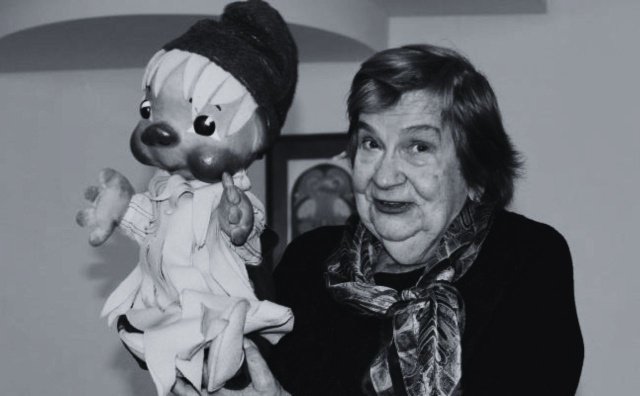
SOFIA, BULGARIA – Veteran puppeteer Slava Racheva, whose decades-long career shaped children’s theatre and television, passes away at age 87
Slava Racheva, one of Bulgaria’s most beloved figures in puppet theatre and children’s entertainment, has passed away, the Sofia Puppet Theatre confirmed. Her death marks the end of an era for generations who grew up with her performances on stage, radio, and television.

Born on April 23, 1938, in Sofia, Racheva began her artistic journey at the remarkably young age of 17. She joined what was then the National Puppet Theatre, later known as the Sofia Puppet Theatre, where she would spend much of her professional life.
Her early start quickly evolved into a defining career. Racheva went on to formally study drama acting at the Krastyo Sarafov National Academy for Theatre and Film, Bulgaria’s premier institution for theatrical education. The training further honed her skills and reinforced her commitment to the art of puppetry.
Over the decades, Racheva became synonymous with some of the most cherished characters in children’s storytelling. Her performances brought to life figures such as Max in “Max and Moritz,” Winnie-the-Pooh, Peter Rabbit in “Rabbit School,” and the philosophical young hero of “The Little Prince.”
Each role she embodied carried emotional depth and imagination, captivating young audiences while also resonating with adults. Her interpretations were not merely performances but formative cultural experiences for many Bulgarian families.
Racheva’s influence extended far beyond the stage. In 1961, she became a household name through her work on the long-running children’s television programme Good Night, Children. There, she gave life to the character Pedya Man-Span Tall, Beard a Yard Long.
The character became iconic, maintaining its popularity for nearly 50 years. It was a testament to Racheva’s ability to connect deeply with audiences through voice, movement, and storytelling.
In one of the most remarkable tributes to her work, a miniature version of the puppet she performed accompanied Bulgaria’s second cosmonaut into space in 1984. The gesture symbolized the profound cultural significance of her contributions and the widespread affection for her characters.
Throughout her career, Racheva also made significant contributions to radio and voice acting. She participated in dubbing children’s films and recording fairy tales, ensuring her voice reached audiences across multiple platforms.
Her work in audio storytelling further expanded her legacy, allowing children to experience her performances beyond the visual realm. This versatility cemented her reputation as a multifaceted artist.
Colleagues and admirers frequently described Racheva as a pioneer in Bulgarian puppetry. Her dedication helped elevate the art form, transforming it into a respected and influential part of the country’s cultural landscape.
Her efforts also played a role in nurturing younger generations of performers. Many contemporary puppeteers and actors cite her as a major inspiration, crediting her with shaping their understanding of performance and storytelling.
Racheva’s achievements were widely recognized both nationally and internationally. Among her numerous honors was the prestigious Golden Age award, one of Bulgaria’s highest distinctions for contributions to culture.
The award reflected not only her artistic excellence but also her enduring impact on Bulgarian society. Through decades of work, she helped define childhood experiences and cultural identity for countless individuals.
Tributes have poured in following news of her passing, with artists, institutions, and fans expressing their sorrow and gratitude. Many have highlighted her warmth, creativity, and unwavering commitment to her craft.
The Sofia Puppet Theatre described her as a “pillar of Bulgarian puppetry” whose influence would continue to be felt for generations. Her legacy, they noted, lives on in every performance that draws inspiration from her work.
Cultural commentators have also emphasized the broader significance of her contributions. In a rapidly changing media landscape, Racheva remained a constant presence, preserving the magic of traditional storytelling while adapting to new forms of expression.
Her passing is seen not only as the loss of a performer but as the departure of a cultural icon whose work transcended time and medium.
For many Bulgarians, Racheva was more than an artist. She was a familiar voice at bedtime, a guiding figure in childhood imagination, and a symbol of artistic dedication.
As Bulgaria reflects on her life and career, her influence remains deeply embedded in the nation’s cultural memory. Her characters, performances, and voice will continue to inspire long after her passing.
The team at Novinite.com, along with countless admirers, has extended its condolences, honoring a woman whose life’s work brought joy, creativity, and meaning to generations.
This article was created using automation technology and was thoroughly edited and fact-checked by one of our editorial staff members