
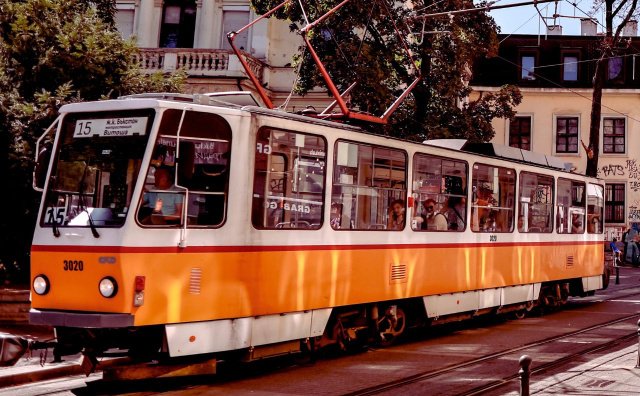
The Sofia Municipality has begun the process of acquiring 80 new trams, launching an initial market consultation through Bulgaria’s national public procurement portal in what officials describe as the city’s most ambitious fleet renewal in more than a decade.

Deputy Mayor for Transport Viktor Chaushev confirmed the move on social media on February 17, outlining a comprehensive plan that extends far beyond simply buying new vehicles. The procurement package includes maintenance facilities, staff training and a decades-long service framework.
City leaders say the initiative represents the largest investment in tram rolling stock in 15 years and will form a cornerstone of the capital’s 2026 transport vision. The aim is to replace aging cars that have increasingly strained operating budgets and reduced reliability.
Rather than a one-off purchase, the project is structured around a full lifecycle approach. In addition to delivering the 80 trams, contractors will be required to build or upgrade depots, supply spare parts and provide technical support for a 30-year service agreement.
Officials argue that this long-term model will stabilize costs and clarify responsibilities between the municipality and operators. By locking in predictable maintenance schedules and performance standards, the city hopes to avoid the patchwork repairs that have plagued the system in recent years.
Chaushev said the strategy is about creating “sustainable management” of the tram network. He stressed that high-quality service cannot be achieved without dependable infrastructure and skilled staff working alongside modern vehicles.
The deputy mayor added that the investment will secure reliable tram operations for decades, improving comfort and safety for passengers while reducing breakdowns that often disrupt daily commutes. Training programs for drivers and maintenance teams are also part of the package.
For residents of Sofia, the modernization is expected to translate into shorter waiting times, quieter rides and better accessibility. New trams are likely to feature low-floor designs, energy-efficient systems and updated passenger information technology.
The city is also looking beyond fleet replacement toward network expansion. One of the priority corridors mentioned by officials is along Todor Kableshkov Boulevard, where improved tram services could connect growing residential districts with business areas and schools.
Transport planners believe the corridor could relieve congestion in rapidly developing neighborhoods in the south of the city. Dedicated tram lines are seen as a cheaper and greener alternative to widening roads or increasing car traffic.
The announcement comes at a time of fiscal uncertainty. Bulgaria’s state and municipal budgets have yet to be fully approved, and public transport operators face rising energy and labor costs. Despite these pressures, city officials insist that delaying strategic infrastructure would be more expensive in the long run.
Chaushev argued that large-scale projects require years of preparation and cannot be paused every time short-term finances tighten. According to him, cities that postpone investment often end up paying more for emergency repairs and outdated systems.
Urban mobility experts broadly support the move. They say long-term service contracts tied to performance standards are becoming common across Europe, helping cities ensure consistent quality while encouraging manufacturers to design durable, efficient vehicles.
Environmental considerations are also central to the plan. New electric trams are expected to reduce noise and emissions, contributing to cleaner air and helping Sofia meet climate targets while promoting public transport as a viable alternative to private cars.
Local residents have welcomed the prospect of a more dependable network, though some remain cautious about execution timelines and costs. Previous transport upgrades in the city have sometimes faced delays, making clear communication and oversight essential.
If completed as planned, the project could redefine the role of trams in Sofia’s transport ecosystem. By pairing vehicles with infrastructure and long-term management, the municipality hopes to create a system capable of supporting growth for generations.
For a city balancing budget challenges with rising demand for mobility, the decision signals a clear message: modernization of public transport remains a priority, even when finances are tight.