
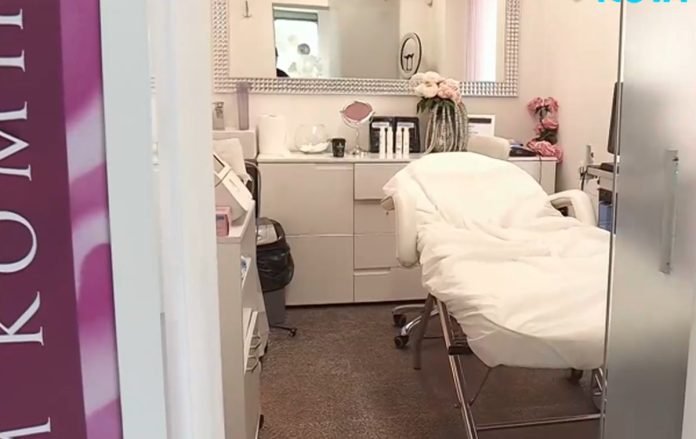
Authorities in Burgas have uncovered what officials describe as one of the most serious privacy violations in recent years, after hidden cameras installed inside beauty salons were allegedly used to secretly film and broadcast intimate procedures online. More than 200 women have so far been identified as victims.
The investigation, led by Bulgaria’s Ministry of Interior of Bulgaria and the Personal Data Protection Commission, has entered a new phase as evidence mounts of an organized system that transmitted footage in real time to paid adult websites.

Lawyer Rosen Diev, who represents many of the affected women, revealed details during an interview with Nova TV. According to Diev, investigators discovered technical traces confirming that hair removal and cosmetic procedures were streamed live rather than merely recorded.
“It turned out that in some of the sites there is actually data that the procedures are broadcast live on more than one porn site,” Diev said, describing the findings as “deeply disturbing” and emotionally devastating for the victims.
Access to the video streams was reportedly sold through paid links. Users could purchase entry using conventional payment methods as well as cryptocurrencies, including Bitcoin, making the transactions difficult to trace and enabling the content to reach international audiences.
Most of the victims were young women, with lawyers estimating that nearly 90 percent are under the age of 30. Many only learned of the recordings after authorities contacted them or after the investigation became public, sparking shock and outrage across the region.
Deputy Interior Minister Toni Todorov clarified that the cameras were not legally installed security devices. Instead, they had been placed at the personal initiative of salon owners without contracts or oversight from licensed security firms.
“The technical means are not used for security activities within the meaning of the Private Security Activities Act,” Todorov explained. “They were not installed by authorized employees of a security company.”
This distinction is critical under Bulgarian law. Surveillance equipment intended for security must meet strict regulatory standards and cannot be placed in areas where personal privacy is expected, such as changing rooms, toilets, or treatment rooms.
Investigators say many of the cameras were positioned precisely in those prohibited spaces, where clients were undressed or undergoing intimate procedures. Such placements constitute clear violations of both privacy regulations and data protection laws.
Pre-trial proceedings have been launched under the supervision of prosecutors. Authorities are examining not only the illegal installation of surveillance equipment but also the potential distribution of pornographic material without consent, which could carry severe criminal penalties.
The scale of the case has complicated the investigation. Officials expect the inquiry to expand as more victims come forward and digital forensics teams analyze servers, payment trails, and hosting platforms potentially located abroad.
Legal experts say the case highlights growing risks tied to cheap surveillance technology and online monetization schemes. Small businesses can now install hidden cameras with little oversight, while global streaming and cryptocurrency payments allow illicit content to spread instantly and anonymously.
For victims, the psychological impact may prove long-lasting. Lawyers are preparing civil claims seeking compensation for emotional distress and reputational harm. Support groups have also urged counseling services to be made available.
As the investigation continues, regulators have warned other businesses to review their surveillance practices immediately. Authorities say the Burgas case should serve as a stark reminder that privacy violations, especially in sensitive settings, will be treated as serious crimes.