
More basic food products in Bulgaria ended 2025 with price declines than increases, according to the latest data from the State Commission on Commodity Exchanges and Markets. However, sharp rises in the prices of key vegetables pushed the overall market price index higher during the final days of the year.
Data covering the period from December 22 to 30 show that the market price index, which tracks wholesale food prices nationwide, rose by 0.5 percent. The index increased from 2.378 to 2.390 points, according to figures cited by the Bulgarian News Agency (BTA).

The index uses a reference base of 1.000 points, set in 2005, meaning current prices remain well above long-term historical levels. Analysts note that even small weekly changes can reflect significant pressures in specific food categories.
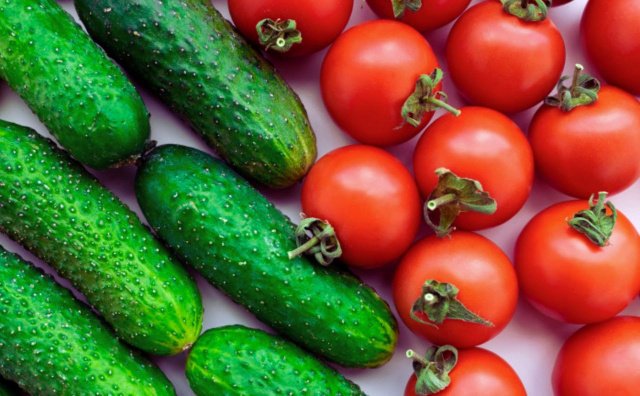
Vegetables recorded the most pronounced price movements during the period. Cucumbers saw the steepest increase among all monitored products, jumping by 11.66 percent to 2.54 euros per kilogram, or about 4.97 leva. The sharp rise was a key factor behind the overall increase in the index.
Tomatoes also became significantly more expensive, gaining 8.79 percent to reach 1.71 euros per kilogram, equivalent to roughly 3.35 leva. Zucchini followed with a notable increase of 5.08 percent, trading at 1.21 euros per kilogram, or around 2.37 leva.
More moderate price increases were observed for other vegetables. Cabbage rose by 2.12 percent, while onions edged up slightly by 0.22 percent. Together, these gains reinforced the upward pressure within the vegetable group.
At the same time, several vegetables recorded price declines. Green peppers saw the sharpest drop, falling by 7.62 percent to 1.14 euros per kilogram, or approximately 2.23 leva. Carrots became cheaper by 3.78 percent, reaching 0.55 euros per kilogram.
Potato prices also declined, dropping by 3.02 percent to 0.46 euros per kilogram, or about 0.90 leva. Red peppers recorded only a marginal decrease of 0.07 percent, settling at 1.39 euros per kilogram.
In the fruit category, price reductions were more widespread. Lemons fell by 3.91 percent to 1.53 euros per kilogram, while apples declined by 2.27 percent to 1.10 euros per kilogram. Oranges also became slightly cheaper, dropping by 0.87 percent.
Bananas were the only fruit to record a price increase during the period. Their price rose by 1.72 percent to 1.39 euros per kilogram, bucking the broader downward trend seen across most fruits.
Dairy products showed relatively limited price movements. Vitosha-type yellow cheese edged up by just 0.09 percent to 9.44 euros per kilogram. Yogurt with a fat content of three percent or more increased by 2.90 percent to 0.73 euros for a 400-gram container.
In contrast, cow’s white cheese became slightly cheaper, with prices down by 0.20 percent to 6.01 euros per kilogram. Fresh milk also declined by 1.35 percent to 1.19 euros per liter, while butter in 125-gram packages fell by 2.10 percent.
Prices in the meat and eggs category also trended downward. Frozen chicken meat dropped by 1.38 percent to 3.52 euros per kilogram. Eggs, size M and sold in bulk, fell by 2.33 percent to 0.21 euros per piece.
Among cereals and staple foods, movements were mixed. Flour type 500 recorded a modest increase of 0.66 percent to 1.78 euros per kilogram. Sunflower oil also rose slightly, gaining 0.43 percent to 1.68 euros per liter.
The steepest decline in this group was recorded for sugar, which fell by 2.96 percent to 0.90 euros per kilogram. Lentils and ripe beans also became cheaper, while rice prices declined by 0.72 percent.
Overall, the data underline how strong price swings in a small number of products, particularly vegetables, can outweigh broader declines across the food basket. As Bulgaria enters 2026, seasonal factors and supply conditions are expected to remain key drivers of short-term price movements.