
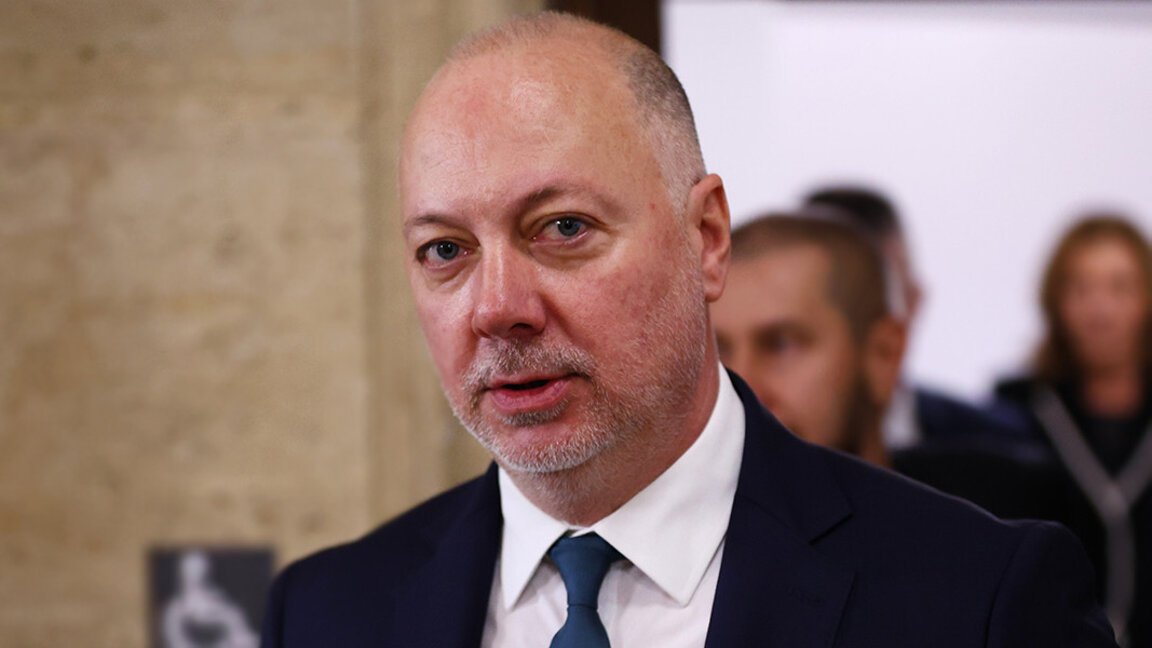
Bulgaria has been thrust into fresh political uncertainty after Prime Minister Rosen Zhelyazkov resigned on Thursday, bringing down a fragile coalition government that had been in power for less than a year.
The resignation comes at a critical moment for the EU and NATO member state, which is finalising preparations to adopt the euro on January 1, a milestone long seen as a symbol of economic stability and European integration.

Zhelyazkov’s departure follows weeks of mounting public anger, with mass protests erupting in Sofia and other major cities over allegations of entrenched state corruption and a controversial budget that included tax increases and spending cuts.
In a brief statement, the outgoing prime minister said his government could no longer function effectively amid “a deep erosion of public trust” and persistent political obstruction within parliament.
The collapse of the coalition marks another chapter in Bulgaria’s prolonged political crisis. The country has held seven parliamentary elections in just four years, leaving voters increasingly fatigued and sceptical about the political class.
Analysts say the latest upheaval underscores the difficulty of sustaining stable governance in a deeply fragmented parliament, where rival parties have struggled to agree on reforms demanded by Brussels.
The now-defunct coalition took office in January with a narrow mandate to stabilise public finances, push through judicial reforms, and complete the technical steps needed for euro zone accession.
While the government made progress on several legislative measures, critics accused it of failing to confront corruption networks and of placing the burden of fiscal consolidation on ordinary citizens.
The proposed budget, which included higher taxes and reduced subsidies, proved particularly unpopular as inflation and living costs continued to squeeze households.
Protesters have accused successive governments of shielding powerful business interests while neglecting social welfare, a narrative that has resonated strongly amid economic uncertainty.
The president is now expected to initiate consultations with parliamentary parties to explore the possibility of forming a new government, though prospects appear slim.
If no viable majority emerges, Bulgaria could be heading toward yet another snap election, potentially the eighth since 2021.
Such a scenario risks prolonging a power vacuum at a time when the country needs decisive leadership to complete euro adoption preparations and reassure international partners.
European officials have repeatedly stressed the importance of political stability, sound public finances, and the rule of law as prerequisites for joining the single currency.
While Bulgaria has met many of the technical criteria, lingering concerns remain over governance, judicial independence, and the fight against corruption.
The latest political shock has raised questions in Brussels about whether Sofia can maintain the necessary policy continuity in the coming weeks.
Within Bulgaria, business groups and trade unions have voiced fears that renewed instability could undermine investor confidence and slow economic growth.
Financial markets reacted cautiously to the news, with analysts warning that prolonged uncertainty could increase borrowing costs and complicate fiscal planning.
Despite the turmoil, some observers argue that public pressure could eventually force political renewal and more accountable governance.
Others, however, warn that repeated elections and short-lived governments risk deepening public disillusionment and empowering populist forces.
For many Bulgarians, the resignation is a familiar but frustrating development, reinforcing the sense that the political system remains trapped in a cycle of crisis.
As the country stands on the brink of a historic economic transition, the coming days will be crucial in determining whether Bulgaria can navigate yet another political storm without derailing its European ambitions.