
Ministry of Transport and Communications of Bulgaria has approved four strategic infrastructure projects aimed at modernizing the country’s most important logistics hubs, committing close to €7 million to improve intermodal operations and cargo efficiency.
The funding package focuses on upgrading rail links, purchasing modern equipment and introducing cleaner technologies at terminals along Bulgaria’s Black Sea coast, in a move officials say will strengthen the nation’s transport competitiveness.

Authorities described the investments as critical to integrating sea, rail and road freight more effectively. By enhancing connections between modes of transport, the ministry hopes to cut transit times and reduce congestion.
The projects concentrate on improvements in Varna and Burgas, two of the country’s busiest maritime gateways, which together handle a large share of Bulgaria’s import and export cargo.
In Varna, the rehabilitation of railway connections to the Varna-West terminal forms the backbone of the upgrade. Aging tracks and outdated facilities have long limited the smooth transfer of goods between ships and trains.
Modernizing those links is expected to accelerate loading operations and enable longer, heavier freight trains, increasing throughput while lowering reliance on trucks for inland transport.
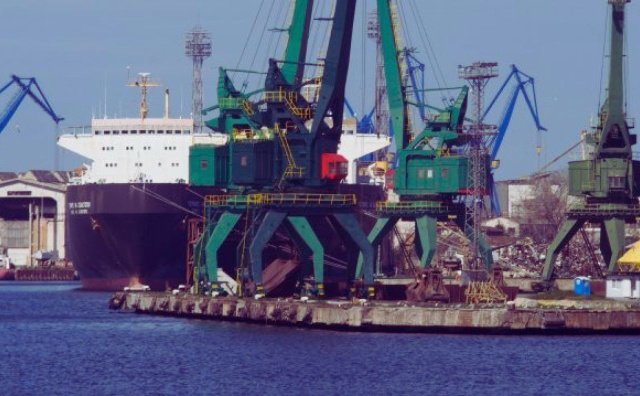
Additional measures in Varna include the purchase of specialized cargo-handling equipment and the acquisition of a new mobile crane for the PCHMV-Varna terminal. The equipment will allow faster container movements and safer operations.
Local operators say the improvements could significantly shorten waiting times for vessels and reduce bottlenecks during peak seasons, when freight volumes often strain existing capacity.
Further south, Burgas will receive similar attention. Railway infrastructure serving terminals in the region will be upgraded to strengthen the interface between port facilities and the national rail network.
A key feature of the Burgas project is the installation of an electric charging station at the Dolno Ezerovo terminal, a step aligned with Bulgaria’s push toward zero-emission logistics solutions.
Officials say electrifying equipment and encouraging rail-based freight will help lower greenhouse gas emissions and fuel consumption, while also reducing noise and air pollution near residential areas.
Specialized cargo-handling machinery will also be supplied to the Port Burgas Terminal, allowing operators to process shipments more quickly and safely, particularly for bulk and containerized goods.
The ministry expects these combined improvements to increase operational efficiency across both ports, enabling higher cargo volumes without the need for extensive new construction.
According to transport analysts, strengthening intermodal capacity is essential as regional trade grows and supply chains become more complex. Efficient rail-to-port links can reduce costs for exporters and importers alike.
By emphasizing combined transport — moving goods seamlessly between ships, trains and trucks — Bulgaria aims to align with broader European sustainability targets while improving its appeal as a transit corridor.
The funding forms part of a broader €17.6 million package under the Transport Connectivity Programme 2021–2027, which supports long-term modernization of the country’s transport infrastructure.
The programme prioritizes strengthening existing facilities rather than building entirely new ones, focusing on smarter use of resources and quicker implementation of improvements.
Government officials say the approach delivers faster returns, allowing businesses to benefit sooner from reduced delays and increased reliability.
Industry representatives have welcomed the investments, noting that ports along the Black Sea face growing competition from neighboring countries with modernized terminals and streamlined operations.
Upgraded infrastructure could help Bulgaria capture a larger share of regional cargo flows, particularly for goods moving between Europe, the Caucasus and the Middle East.
The ministry stressed that environmental performance remains central to the strategy. Introducing electric systems and encouraging rail freight are seen as critical steps toward meeting climate commitments.
Construction and procurement for the projects are expected to begin in phases over the coming months, with authorities targeting completion before the end of the current EU funding cycle.
If successful, officials say the upgrades will position Bulgaria as a more resilient, efficient and environmentally responsible logistics hub, strengthening its role in regional and international trade networks.